
What Is a URL Shortener and What Happens After You Click?

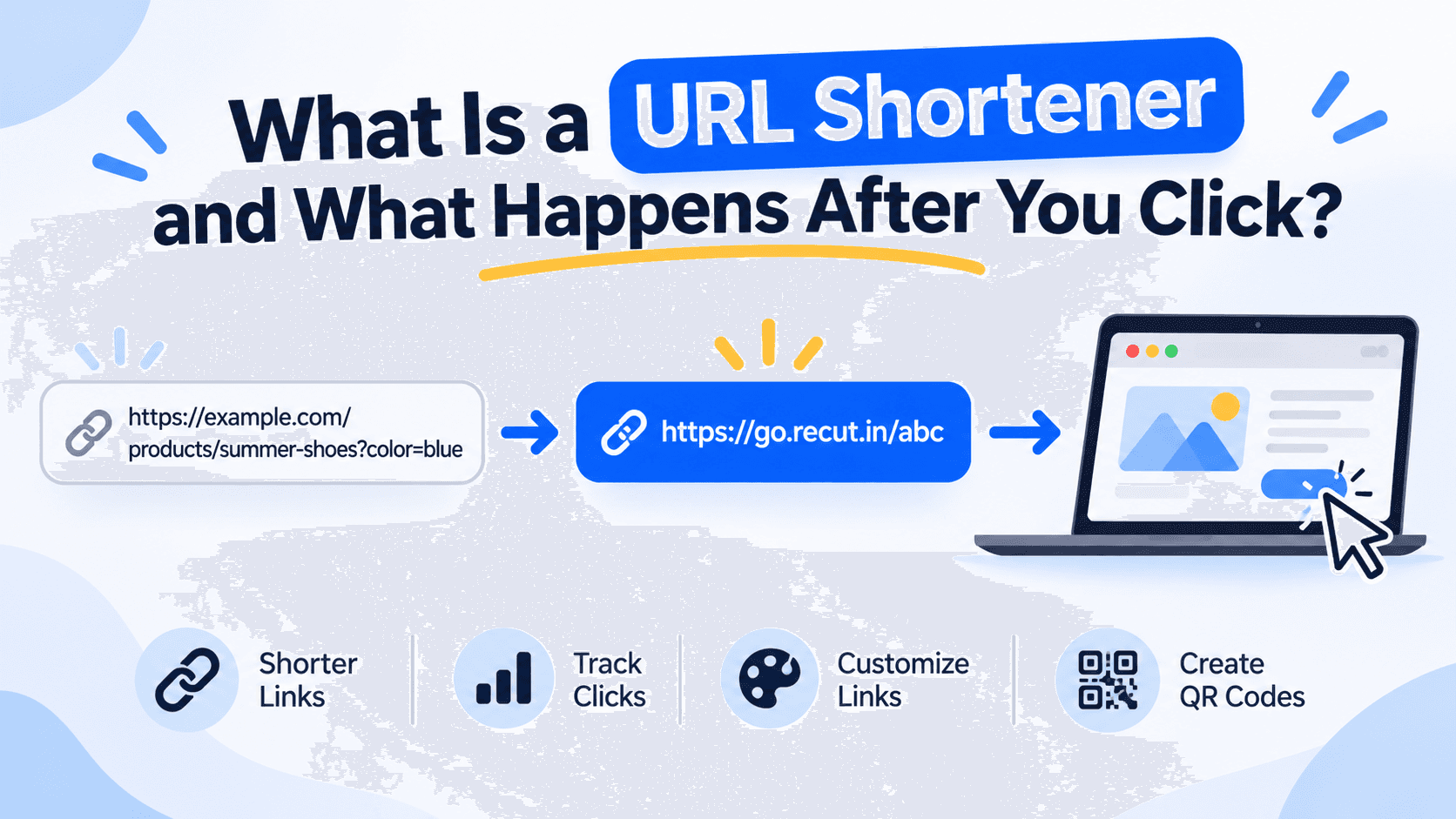
A URL Shortener is simply a tool that allows users to generate a shorter URL from a longer one.
You probably know the drill. You see an interesting link, whether in a text message, on social media, or on a billboard. You want to take a look, but the link is a little too long for that, and it might not even fit on your mobile device. What do you do? You use a URL shortener.
A short link is actually a shorter address that is stored and connected to the original URL through the shortener service. Shortening a URL does not mean changing the original address. It involves using a redirect. The short URL connects to the long URL and acts as a substitute address.
What happens after the short URL is clicked?
A short link service provides a shorter version of a long, complex web address. For example, the long address, https://example.com/products/summer-shoes?color=blue, can be shortened to https://rcut.in/shoes. This short link is associated with the original address. When a user clicks on it, their browser requests the short URL from the short link service. The service identifies the associated long address and instructs the browser to load that destination. In the eyes of the user, this process is equivalent to clicking a normal link.
The short link service keeps information about the short link and its clicks in order to provide link analytics. These may include total clicks, location data, device data, and the source that referred the visitor. However, this information does not give a complete picture of everything a user does on the web page.
Why choose a short link?
There are many reasons why using a short link can be beneficial. For one, they can be easier to read, type, or print. They also allow you to customize the ending of a link to describe its purpose. You can also create links using a branded domain, allowing customers to easily identify links as belonging to your company.
There are also more advanced options for link routing. You can send visitors to different destinations based on their location, device, or language, for example. Some of these features can be quite complex and require a lot of testing to ensure they don't send customers to the wrong pages.
Are links always better when they're shorter?
Not always. For links to other pages that are already short and easy to type, there's no reason to redirect users to a shorter URL. A URL shortener adds an extra service between the user and the final page. You should always make sure the service you are using is reliable. Recut offers a reliable service with a wide variety of features.
There are other things Recut offers besides URL shortening. You can create QR codes, use branded domains, and access link analytics. You can explore these offerings on Recut's website. Recut also offers bio pages. The question you should ask isn't whether every URL should be shortened. You should ask whether shortening a particular URL makes sharing that link easier.
Gaurav Kumar
AuthorWriting about link infrastructure, branded domains, retargeting pixels, and URL shortener analytics.