
How to Send Short-Link Click Events to Your App With Webhooks

What a click webhook does
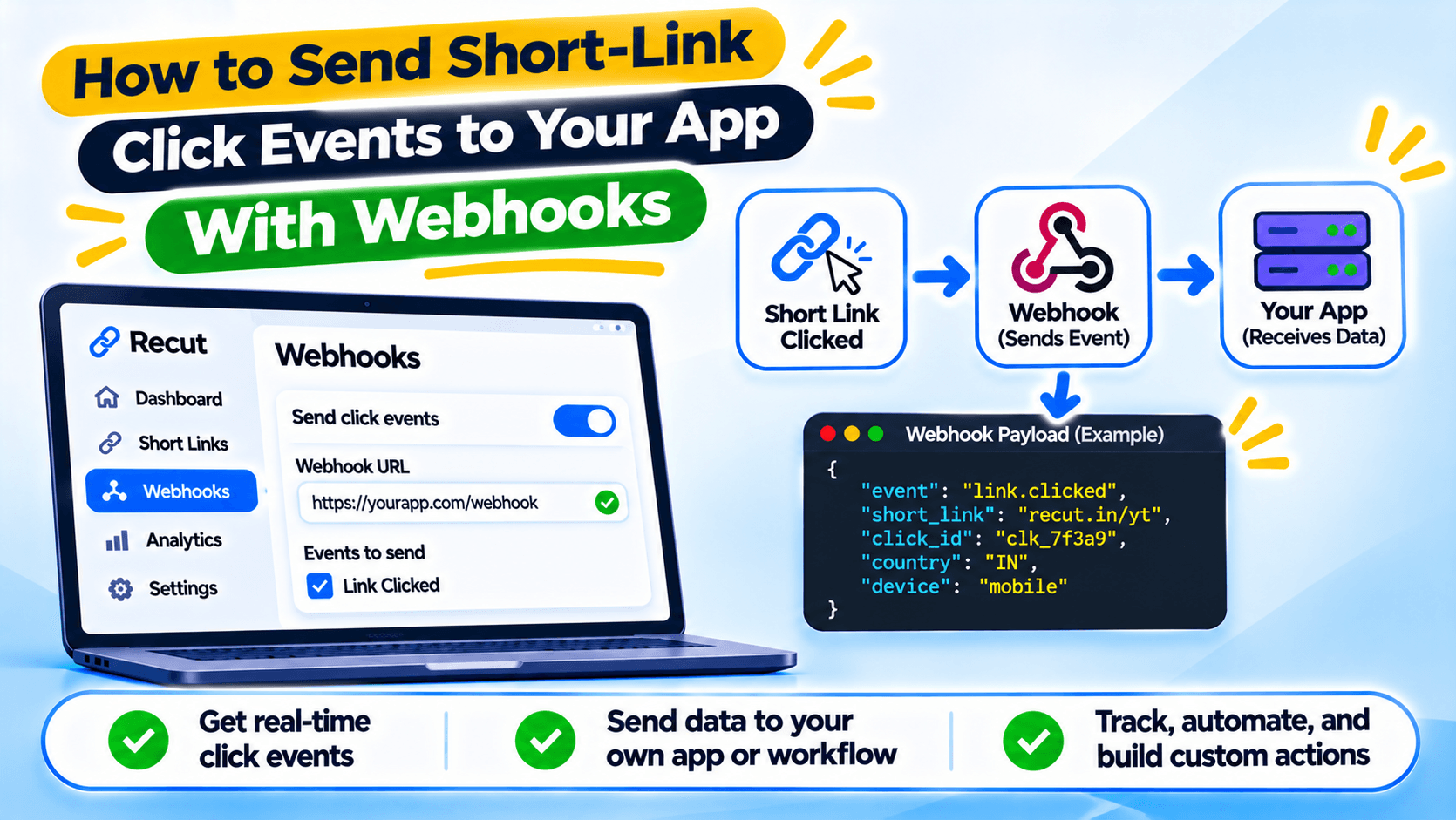
A webhook is an HTTP request sent from one service to another when an event happens. A URL shortener can use a click event to tell your app that someone opened a short link. Your server can then update an internal report, notify a workflow or pass the event to another system.
A webhook is different from asking an API for data every few minutes. The service sends the event when it happens.
What your server needs to handle
A production webhook needs more than a public URL. Your app needs to know which event is being sent, what the request body looks like and how to check that the request really came from the service. It also needs to handle retries and duplicate deliveries.
Verify the sender before processing the event
Use the signature or authentication method documented by the webhook provider. Do not trust a request just because it contains a link ID or click time. Without verification, someone could send fake events to your public endpoint.
Make the receiver safe to retry
A provider may send the same event again if your server times out or does not return a success response. Store a unique event ID and check it before creating a new record. This prevents one click from appearing several times in your system.
Keep the receiver quick. Save the accepted event and move heavier work to a queue. Log failures without storing secrets or unnecessary visitor data.
What to confirm before writing code
Before you build a receiver, get the current event name, sample JSON payload, signature header, retry schedule, timeout, duplicate-delivery rules and delivery-log location. You also need to know which response code tells the sender that the event was accepted.
Do not copy a sample payload from another URL shortener. Field names and signing rules are specific to each service.
Before you code a Recut click-webhook receiver
We list real-time click webhooks as a Recut feature. Before you connect a production app, get the current event payload, authentication method, retry schedule and duplicate-delivery rules from our team. Do not guess field names or build against a sample from another service.
Frequently asked questions
What is a URL shortener webhook?
It is an HTTP request sent to your server when an event, such as a short-link click, occurs.
What should a click webhook payload contain?
The provider should document the event type, unique event ID, timestamp and link identifier. Confirm the exact field names in the current specification.
How do I stop duplicate webhook events?
Store a unique event ID and ignore a delivery that your system has already processed.
Why should I verify a webhook signature?
Signature verification helps confirm that the request came from the expected service and was not changed in transit.
Can I use Recut click webhooks in production now?
Recut lists real-time click webhooks, but confirm the current setup steps, payload, authentication and retry rules before writing a production integration.
Gaurav Kumar
AuthorWriting about link infrastructure, branded domains, retargeting pixels, and URL shortener analytics.